Neural Counterpoint: How Polyphony Shapes the Musical Brain
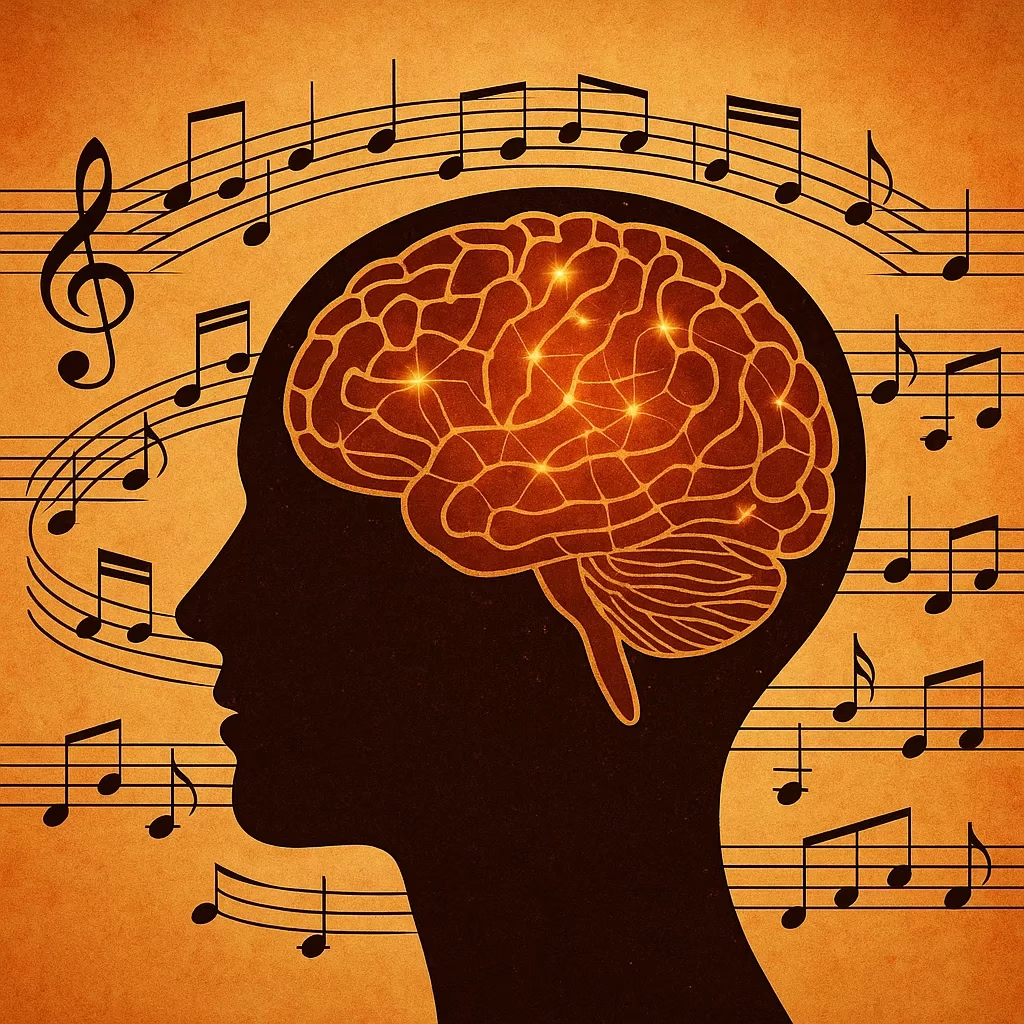
prefrontal cortex and parietal lobes coordinate attention and spatial awareness (Zatorre, Chen, & Penhune, 2007). The cerebellum tracks rhythmic timing, and the limbic system responds emotionally to harmonic tension and release. Polyphony invites the brain to coordinate parallel information streams with elegance and structure. This kind of complex listening enhances working memory, attentional flexibility, and pattern recognition — all skills with broad cognitive benefits.
Practicing Complexity as a Tool for Education and Development
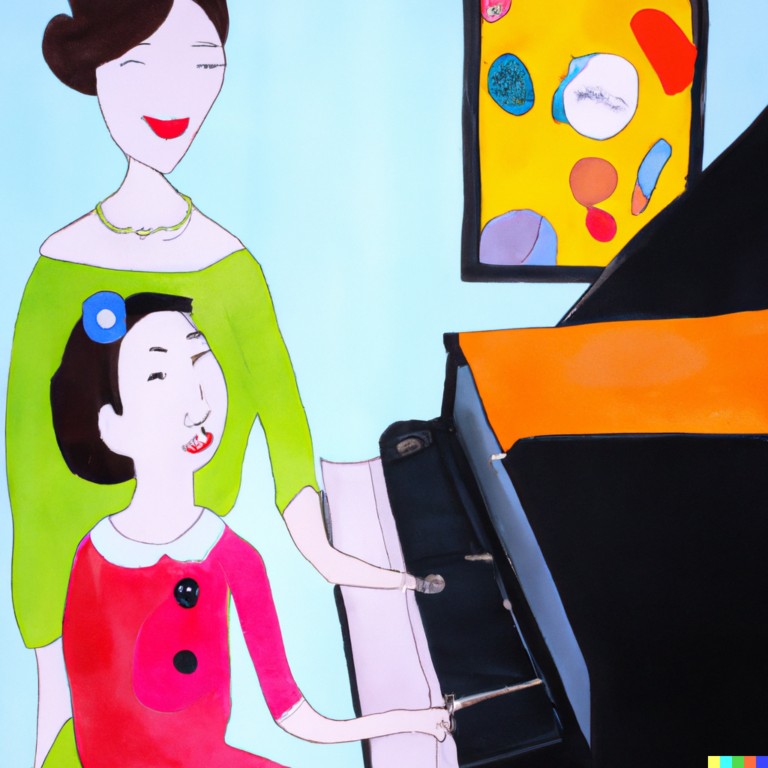
Performing polyphonic music amplifies these effects. When a pianist plays a fugue, or a singer holds an inner voice line in the choir while others move independently around them, they engage in what
Herholz & Zatorre (2012) describe as “embodied cognition.” Their brain must anticipate harmonic implications, adjust pitch and timing in real-time, and maintain an internal thread even when it recedes into texture.
This engages the executive function system in our brain— attention control, working memory, and self-monitoring — which leaves measurable changes in our neural functions over time. In musicians, studies have shown
increased thickness of the corpus callosum (Schlaug et al., 1995), a region that links the two hemispheres of the brain.
Follow-up research confirms enhanced white-matter plasticity in musicians who began training in early childhood (Steele et al., 2013).
The structure and predictability of polyphonic music make it an ideal medium for early music education. Children exposed to imitation games and multi-part singing, as found in Kodály and Dalcroze methods, tend to show improvements in
verbal intelligence and auditory memory (Forgeard et al., 2008). This structured complexity is especially promising for neurodivergent learners. Autistic children, for example, may find polyphony’s rule-based logic more accessible and emotionally engaging than unstructured musical experiences.
Listening as Mental Training
Even for non-performers, listening to polyphony can act as a contemplative practice. Following a fugue — losing the subject and finding it again — mimics the attentional rhythms of mindfulness. Studies have shown that music listening can regulate emotional states, lower cortisol levels, and increase alpha-wave activity, associated with focused calm (Thoma et al., 2013).
The act of distinguishing voices, predicting entrances, and hearing harmonic logic unfold creates a mental choreography — a rich, aesthetic workout for the brain. In an era of digital noise and fractured attention, polyphony offers something radical: a sustained encounter with ordered complexity. It does not quiet the world, but it teaches us to listen more deeply within it.
References
- Zatorre, R. J., Chen, J. L., & Penhune, V. B. (2007). When the brain plays music: auditory–motor interactions in music perception and production. Nature Reviews Neuroscience, 8(7), 547–558.
- Herholz, S. C., & Zatorre, R. J. (2012). Musical training as a framework for brain plasticity: behavior, function, and structure. Neuron, 76(3), 486–502.
- Schlaug, G., Jancke, L., Huang, Y., & Steinmetz, H. (1995). Increased corpus callosum size in musicians. Neuropsychologia, 33(8), 1047–1055.
- Steele, C. J., Bailey, J. A., Zatorre, R. J., & Penhune, V. B. (2013). Early musical training and white-matter plasticity in the corpus callosum: Evidence for a sensitive period. Journal of Neuroscience, 33(3), 1282–1290.
- Forgeard, M., Winner, E., Norton, A., & Schlaug, G. (2008). Practicing a musical instrument in childhood is associated with enhanced verbal ability and nonverbal reasoning. PLOS ONE, 3(10), e3566.
- Thoma, M. V., Ryf, S., Mohiyeddini, C., Ehlert, U., & Nater, U. M. (2013). Emotion regulation through listening to music in everyday situations. Cognition & Emotion, 27(3), 534–543.
About the author:
 Dr. Antonella Di Giulio is an entrepreneur, pianist, scholar, educator, and music professional with a Ph.D. in Music Theory and Historical Musicology based in the USA. Her innovative research on music semiotics and analysis intersects with her work in education, where she has trained teachers for the Bertelmanns Foundation, presented workshops and professional development courses for educators and founded two online platforms, MusicaIQ and Micadio. She is chair and founder of the Erie Niagara Conservatory of Music. As a certified teacher trainer, clinician, entrepreneur, seasoned performer, and researcher, Antonella’s multifaceted background contributes to her comprehensive and insightful perspective on music, cognition, and education.
Copyright ©2025, Musica IQ. All rights reserved.