Decoding the Hidden Meanings in Musical Performance

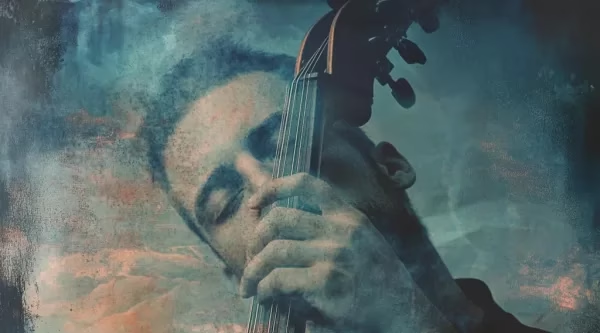
Music semiotics provides the framework to decode these meanings, connecting the intentions of the composer, the interpretation of the performer, and the reception by the audience. By exploring how music communicates through signs, this article delves into the layers of meaning that enhance both the performance and experience of music.

Free Membership Required

You must be a Free member to access this content.

Join Now

Already a member? Log in here

Similar Posts

  • When a Teacher Makes It About Themselves

    [fusion_builder_container type=”flex” hundred_percent=”no” hundred_percent_height=”no” hundred_percent_height_scroll=”no” align_content=”stretch” flex_align_items=”flex-start” flex_justify_content=”flex-start” flex_wrap=”wrap” hundred_percent_height_center_content=”yes” equal_height_columns=”no” container_tag=”div” hide_on_mobile=”small-visibility,medium-visibility,large-visibility” status=”published” spacing_medium=”” spacing_small=”” padding_dimensions_medium=”” padding_dimensions_small=”” border_sizes=”” border_style=”solid” box_shadow=”no” box_shadow_blur=”0″ box_shadow_spread=”0″ gradient_start_color=”” gradient_end_color=”” gradient_start_position=”0″ gradient_end_position=”100″ gradient_type=”linear” radial_direction=”center center” linear_angle=”180″ background_position=”center center” background_repeat=”no-repeat” background_custom_size=”” background_custom_size_medium=”” background_custom_size_small=”” fade=”no” background_parallax=”none” enable_mobile=”no” parallax_speed=”0.3″ background_blend_mode=”none” background_slider_position=”” background_slider_skip_lazy_loading=”no” background_slider_loop=”yes” background_slider_pause_on_hover=”no” background_slider_slideshow_speed=”5000″ background_slider_animation=”fade” background_slider_direction=”up” background_slider_animation_speed=”800″ video_aspect_ratio=”16:9″ video_loop=”yes” video_mute=”yes” pattern_bg=”none” pattern_custom_bg=””…

  • The Value of Non-Traditional and Popular Music in Music Education

    The inclusion of non-traditional and popular music in music lessons offers a multitude of benefits, extending beyond mere engagement to enrich the educational experience in profound ways. Here, we explore the multifaceted value these genres bring to music education.   Enhancing Student Engagement and Motivation One of the most immediate benefits of integrating non-traditional and…

  • What is the best way to teach music?

    In the realm of music education, the question of which teaching method is most effective has always been a subject of discussion. What books should I use? What method works best? Over the decades, the field has seen a plethora of approaches, from classical pedagogies founded by renowned musicians to the digital disruptions that characterize our modern age. This article explores the most effective ways of teaching music through an interdisciplinary lens, integrating perspectives from music theory, semiotics, linguistics, and technology.

  • How Musical Training Shapes the Brain

    Music isn’t just an art form—it’s a tool that can reshape the brain and enhance cognitive abilities, as recent research confirms. Studies have shown that both musical training and active listening promote brain plasticity, strengthening memory, attention, and emotional regulation. For educators and musicians, this opens new opportunities to incorporate strategic musical practices in teaching and learning.